Choosing a Kansa comb or a wooden comb is a small decision that shapes a daily grooming ritual. Both are traditional, both are kinder to the hair than plastic, and both have a place in Ayurvedic hair care. A Kansa comb is made of bronze, while a wooden comb is usually carved from neem or another close grained wood. This guide compares the two so you can pick the one that suits your hair, your scalp and the ritual you want to keep.
What each comb is
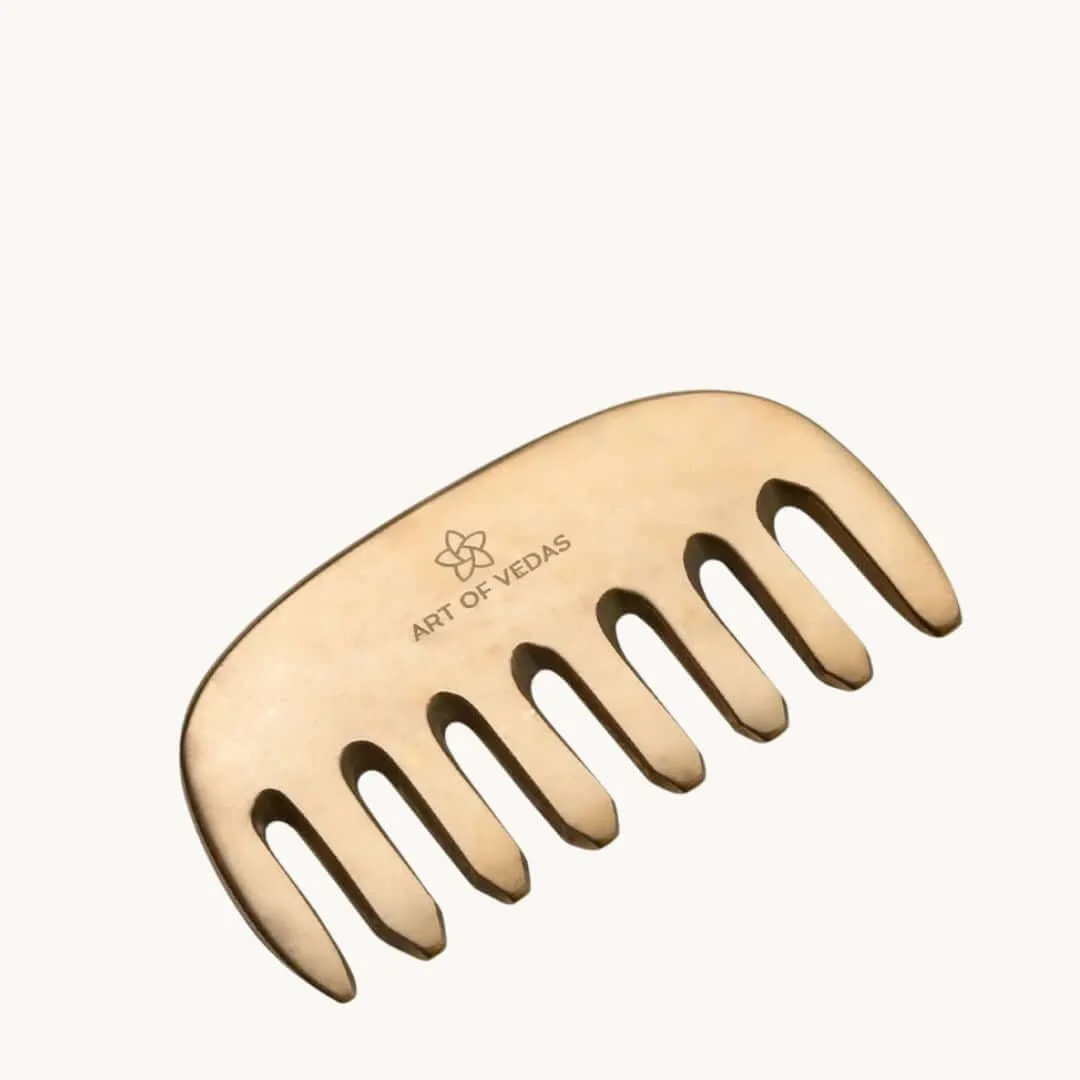
A Kansa comb is cut and finished from Kansa, the bronze alloy of copper and tin that Ayurveda has long favoured for tools. Its teeth are smooth and cool, and the metal carries a pleasant weight through the hair. A wooden comb is shaped from a single piece of wood, warm to the touch and very light, with teeth that glide without the static a plastic comb can create. Both are worlds away from mass produced plastic, and both belong to a slower, more mindful approach to grooming.
How they feel and behave
The clearest difference is in the hand. Bronze feels cool and substantial, and many enjoy the smooth, grounding sensation of metal teeth moving across the scalp. Wood feels warm and featherlight, and it is often the gentler choice for very fine or easily tangled hair. Neither builds up static the way plastic does, so both leave the hair calmer. On the scalp, the Kansa comb offers a firm, cooling contact, while the wooden comb offers a soft, quiet stroke.
- The Kansa comb: cool, smooth and weighted, with a grounding metallic feel across the scalp.
- The wooden comb: warm, light and quiet, gentle on fine or delicate hair.
- Both reduce static compared with plastic, leaving hair smoother.
- Both suit slow, mindful combing as part of a daily ritual.
- Both pair naturally with a nourishing hair oil worked through the lengths.
The tradition behind the ritual
Combing is part of Dinacharya, the Ayurvedic daily routine, and it is traditionally done with unhurried, even strokes rather than a hasty tug. Bronze tools carry the same regard in hair care as they do in massage, which is why a Kansa comb feels of a piece with a wider bronze ritual. To go further, our Kansa comb hair and scalp guide and the weekly Kansa hair and scalp ritual show how the comb fits into a complete practice. If you enjoy comparing bronze with other tool materials, our Garshana, Kansa and Gua Sha chooser takes the same honest approach across the face and body.
On craft, the Kansa comb is finished so its bronze teeth are rounded and smooth, never sharp, and it develops a natural patina with time as all bronze does. A wooden comb relies on the quality of its carving and the smoothness of its teeth, and it prefers to be kept dry and away from prolonged damp. Both reward a little care: clean between the teeth, keep them dry, and store them where they will not be crushed. Paired with an oil such as Neelibhringadi hair oil, either comb helps spread the oil evenly through the lengths.
Which should you choose?
If you want a cool, weighted, grounding comb and enjoy the character of bronze, choose the Kansa comb. If your hair is very fine or prone to tangling and you prefer the lightest touch, a wooden comb may suit you better. As with the bronze tools of massage, there is no single right answer, and some keep both for different days and different needs.
Frequently Asked Questions
Is a Kansa comb better than a wooden comb?
Neither is simply better. The Kansa comb offers a cool, weighted, grounding feel, while a wooden comb is warm and very light. The right one depends on your hair and preference.
Does a Kansa comb cause static?
Bronze does not build static the way plastic does, so a Kansa comb leaves hair calmer and smoother.
Can I use a hair oil with either comb?
Yes. Both combs help spread a nourishing oil evenly through the lengths as part of a hair ritual.
How do I care for a Kansa comb?
Clean between the teeth, keep it dry, and store it safely. A natural patina on the bronze is normal and harmless.
Which comb is gentler on fine hair?
A wooden comb is often the gentler choice for very fine or delicate hair, though a smoothly finished Kansa comb is also kind when used slowly.
For external use only. Not a substitute for professional medical advice.