Eranda, le ricin, occupe en Ayurveda classique une place à part. Sa graine livre une huile épaisse et pénétrante que la tradition compte parmi les substances externes les plus polyvalentes, tandis que sa racine entre dans la pharmacopée par une tout autre voie. Ce guide établit la distinction essentielle entre l’huile de graine de ricin et la racine de ricin, expose le rôle de l’huile comme l’un des trois corps gras classiques du Kuzhambu et décrit ses usages externes traditionnels dans le respect du contexte classique.
Identité botanique: la graine et la racine
Eranda est le Ricinus communis, plante à croissance rapide des climats chauds, reconnaissable à ses larges feuilles étoilées. Elle fournit deux matières bien distinctes. La graine, une fois pressée, donne l’huile de ricin, huile fixe lourde et onctueuse. La racine, elle, s’emploie sous le nom d’Eranda Moola, la racine de ricin, préparée en Kwath, c’est-à-dire en décoction, et disponible sous forme de Choornam en poudre. La confusion entre les deux est fréquente: mieux vaut donc les tenir séparées d’emblée, l’huile étant un corps gras pressé et la racine une plante à décocter.
Le caractère classique de l’huile
Les descriptions classiques prêtent à l’huile de ricin une note Madhura et Kashaya dans un caractère à dominante Ushna, chauffante, et insistent sur sa qualité Snigdha, onctueuse et pénétrante. Dans le cadre ayurvédique, l’huile est traditionnellement rangée parmi les substances qui stabilisent Vata, et l’on prise la manière dont elle est dite atteindre et assouplir. Comme toutes les descriptions classiques, ces indications portent sur les qualités traditionnelles de la substance et sur son rôle, non sur un quelconque effet médical.
Le troisième corps gras du Kuzhambu
Un Kuzhambu est une huile médicamenteuse classique bâtie sur une base réunissant plusieurs corps gras, et l’huile de ricin y est la troisième des bases classiques, aux côtés du sésame et de la coco. Là où le sésame réchauffe et la coco rafraîchit, le ricin apporte une qualité lourde, profondément pénétrante, que la tradition apprécie pour un type particulier de préparation ancrante et onctueuse. Sa présence explique en partie qu’un Kuzhambu diffère, au toucher comme au caractère, d’un Thailam à huile unique.
- Traditionnellement apprécié comme corps gras de base, lourd et pénétrant, dans les préparations classiques de Kuzhambu.
- Classiquement rangé parmi les substances Snigdha qui stabilisent Vata.
- Employé en externe dans les traditions d’Abhyanga et d’application chaude de la pratique kéralaise.
- Distinct de l’Eranda Moola, la racine de ricin, qui est une plante à décocter et non un corps gras.
Eranda dans les préparations Art of Vedas
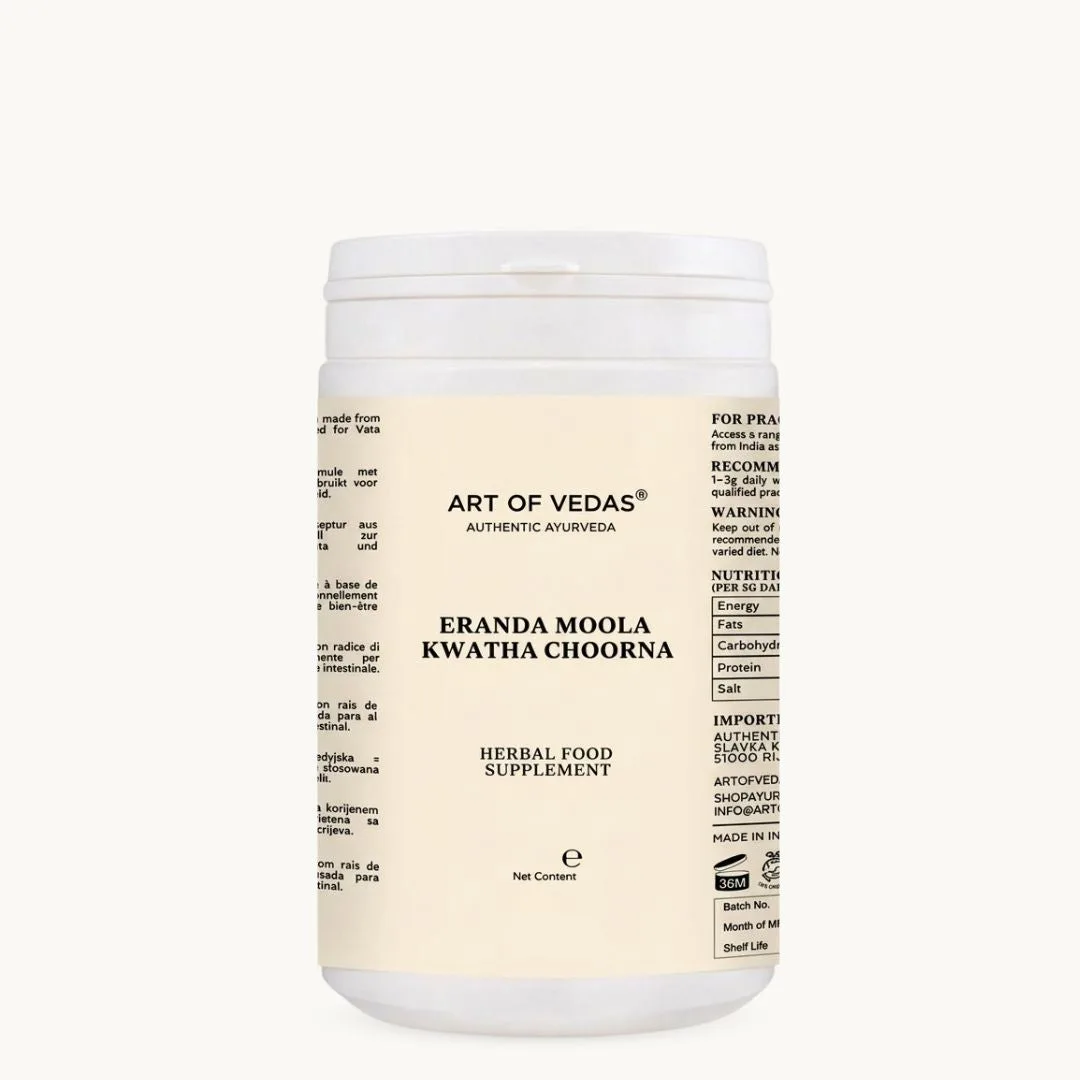
Dans les faits, le ricin rejoint la gamme Art of Vedas sous ses deux visages classiques. L’huile pressée de la graine est proposée comme huile de ricin d’usage externe et comme l’un des trois corps gras qui fondent la tradition du Kuzhambu, tandis que la racine se présente sous la forme de l’Erandamoola Kwath Choornam, la plante à décocter réduite en poudre. Tenir les deux séparés éclaire la lecture du rayon: l’un est un corps gras, l’autre un Choornam. Vous pouvez découvrir l’huile de ricin ainsi que l’Erandamoola Kwath Choornam. Pour le contexte plus large, voir le guide des Kashayam, les décoctions classiques dans lesquelles la racine se prépare, le guide de l’huile de base de sésame qui décrit le corps gras compagnon du Kuzhambu, et le guide de la formulation classique en poudre, le Churnam.
Un contexte culturel respecté
Eranda accompagne depuis très longtemps la pratique domestique et savante de l’Inde, où l’on apprécie sa fiabilité dans les soins externes. Art of Vedas le présente dans cet esprit: une substance traditionnelle au rôle classique documenté, à employer avec discernement et, le cas échéant, avec le conseil d’un praticien qualifié.
Questions fréquentes
Qu’est-ce qu’Eranda en Ayurveda?
Eranda est le ricin, Ricinus communis. Sa graine donne l’huile de ricin, corps gras lourd et pénétrant, tandis que sa racine s’emploie séparément sous le nom d’Eranda Moola, plante à décocter. Les deux sont bien distincts.
L’huile de ricin et la racine de ricin sont-elles la même chose?
Non. L’huile de ricin est l’huile fixe pressée de la graine. L’Eranda Moola, la racine de ricin, se prépare en décoction Kwath et se présente en poudre de Choornam. Mieux vaut garder le corps gras et la racine bien séparés.
Pourquoi emploie-t-on l’huile de ricin dans un Kuzhambu?
Le ricin est le troisième des trois corps gras classiques du Kuzhambu, avec le sésame et la coco. Il apporte une qualité lourde et profondément pénétrante qui donne au Kuzhambu son caractère ancrant si particulier.
Quelles sont les qualités classiques de l’huile de ricin?
Les descriptions classiques la lisent comme à dominante Ushna, chauffante, avec une qualité Snigdha onctueuse et pénétrante. Elle est traditionnellement rangée parmi les substances qui stabilisent Vata dans la pratique externe.
Comment l’huile de ricin s’emploie-t-elle traditionnellement?
En externe, dans les traditions d’Abhyanga et d’application chaude, et comme corps gras de base dans les préparations classiques de Kuzhambu. L’usage personnel s’envisage au mieux avec le conseil d’un praticien qualifié.
Ce produit est un complément alimentaire et n’est pas destiné à diagnostiquer, traiter, guérir ni prévenir une quelconque maladie.