Kapikacchu is one of the bluntest names in the materia medica. Kapi is a monkey. Kacchu is an itch. The name means, roughly, the one that makes you scratch like a monkey.
What it describes
The seedpod of Mucuna pruriens is covered in fine hairs that irritate skin on contact. The name records that, and it is the reason the plant is handled carefully at harvest.
A warning, not a quality
The itch belongs to the pod, not to the seed inside it. The classical name is describing the plant in the field rather than the material that ends up in a preparation, which is the distinction the seed guide draws out.
The other name
The same plant is also Atmagupta, the secret self, for the seed hidden inside that pod. One plant, two names, describing the same arrangement from opposite sides.
On the label
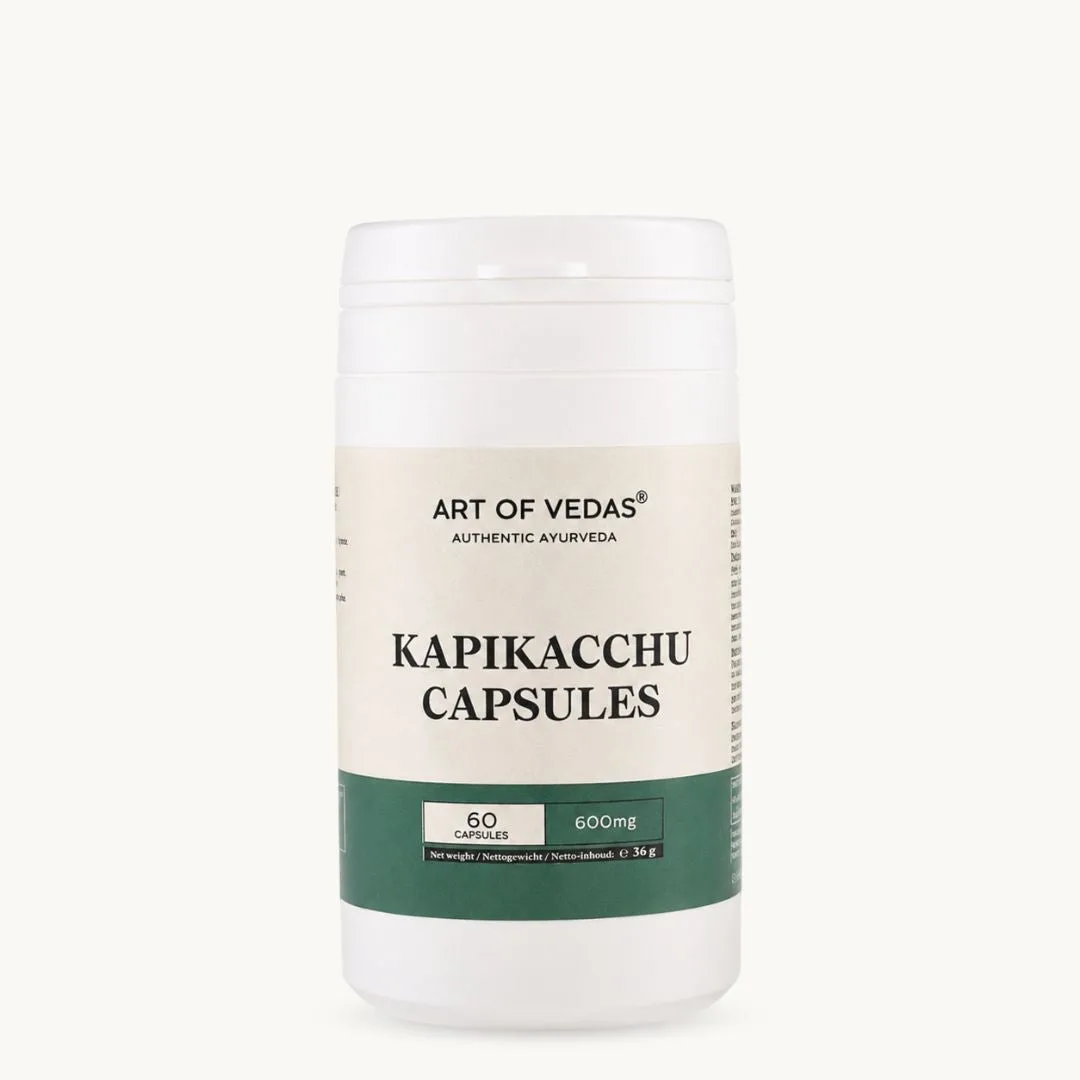
Kapikacchu Capsules name Mucuna pruriens and the part used.
Frequently Asked Questions
What does Kapikacchu mean?
One who itches like a monkey, from kapi, monkey, and kacchu, itch.
Do the capsules cause itching?
No. The irritant hairs are on the pod, not the seed.
Is cowhage the same plant?
Yes, cowhage is an English common name for it.
This article is for educational purposes and describes the classical Ayurvedic record. The products mentioned are food supplements, not a substitute for a varied, balanced diet, and are not intended to diagnose, treat, cure or prevent any disease. Take them under the guidance of a qualified Ayurvedic practitioner.