Dans la pratique traditionnelle, une même formule chauffante se présente souvent sous plusieurs formes à la fois, chacune tenant son rôle dans un soin. Le Kottamchukkadi en offre un bon exemple. Il se prépare en poudre, en huile et en Kuzhambu, et entre les mains d’un praticien expérimenté ces formes s’emploient ensemble plutôt qu’isolément. Le présent guide observe la manière dont la poudre, l’huile et le bolus tiède appelé Kizhi se combinent, et la place qu’y tient le Kuzhambu semi-solide.
Trois formes, un même principe chauffant
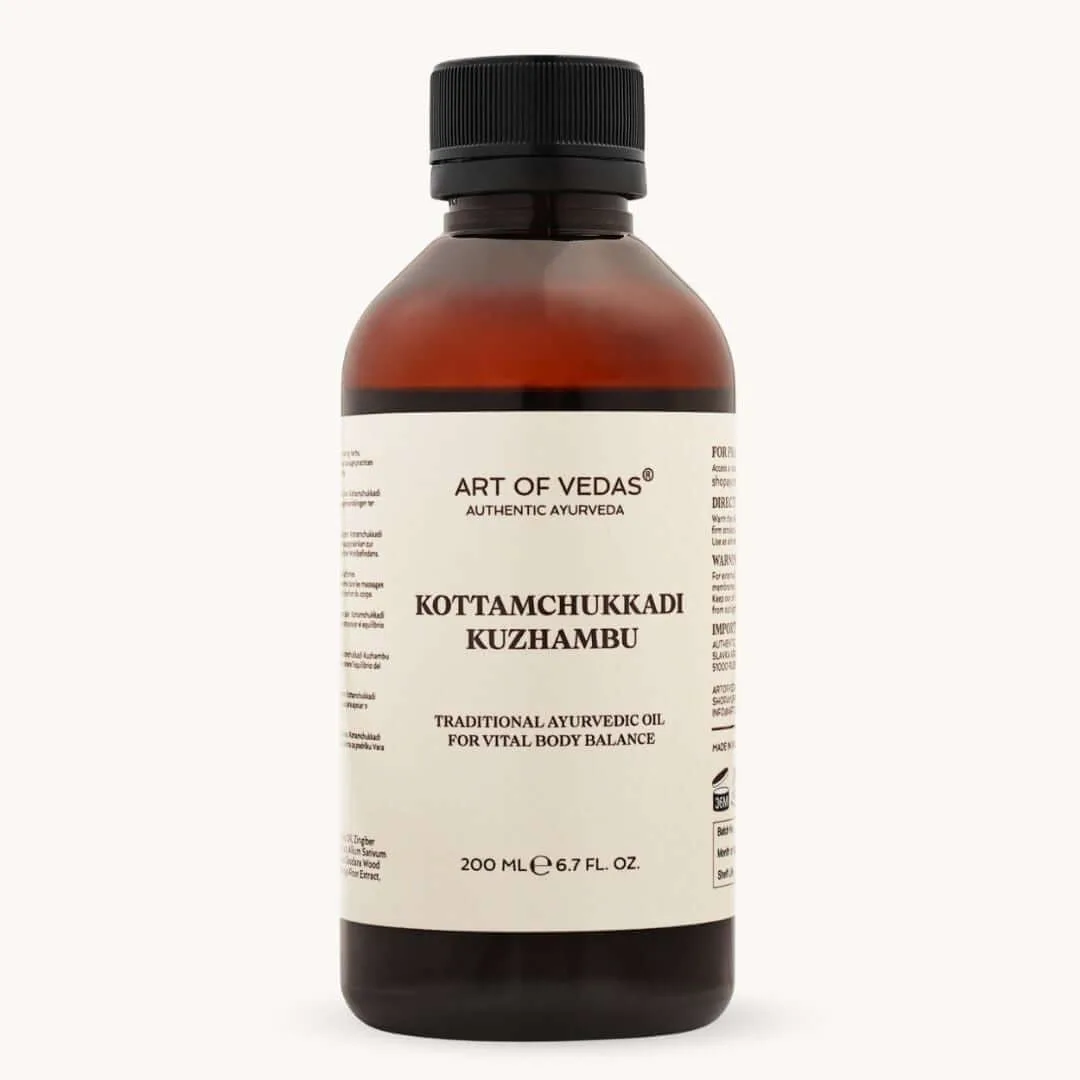
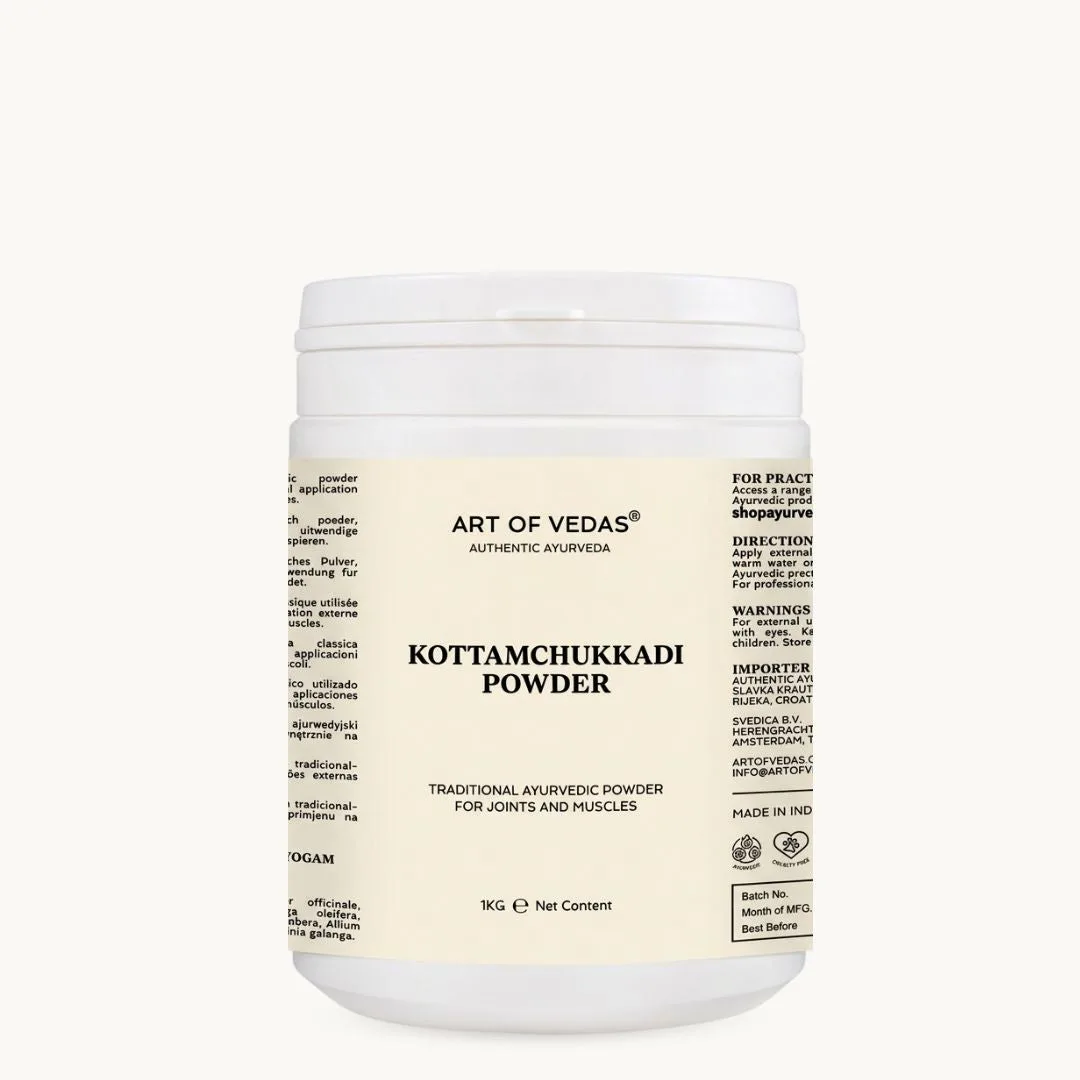
La formule Kottamchukkadi, bâtie sur le Kostam et le gingembre séché, porte un caractère chauffant et aromatique quelle que soit la forme retenue. La poudre de Kottamchukkadi est le mélange végétal sec, l’huile est le Thailam, et le Kottamchukkadi Kuzhambu la préparation réduite et semi-solide. Chacune est décrite dans notre guide complet du Kottamchukkadi Kuzhambu. Ce qui les unit est le principe chauffant commun; ce qui les distingue est la manière de les appliquer.
La poudre et son rôle
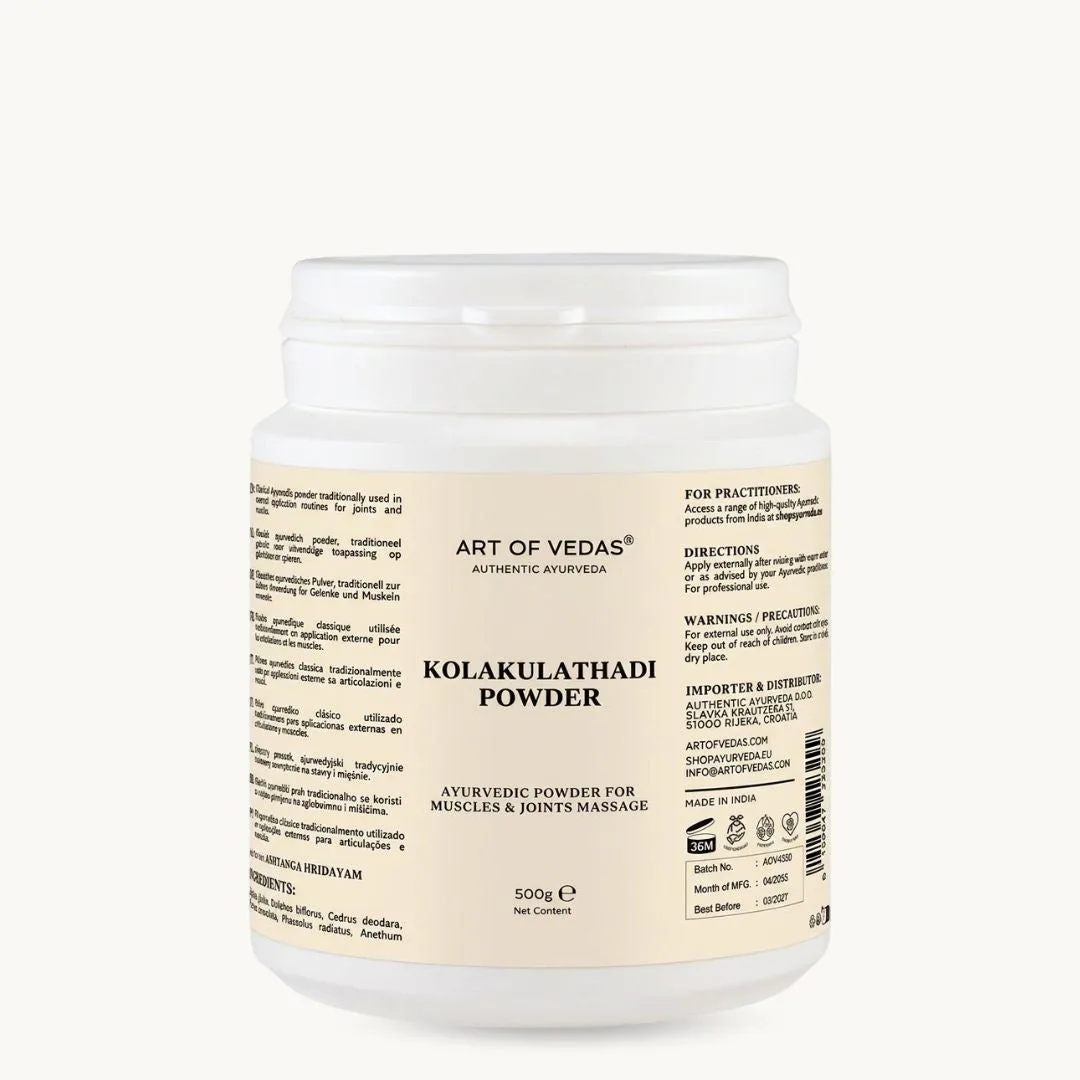
La poudre est la plus polyvalente des trois. Churnam sec, elle se laisse tiédir, nouer dans un linge en bolus, ou incorporer à des pâtes et des cataplasmes. Sa nature sèche et chauffante la place au cœur du travail de cataplasme pour lequel le est connu. Les praticiens gardent souvent plus d’une poudre chauffante sous la main, et un mélange voisin tel que la poudre de Kolakulathadi s’emploie dans le même esprit; ses propres traditions sont décrites dans notre guide du Kolakulathadi Choornam. C’est de la poudre que part l’essentiel de la tradition du cataplasme chauffant.
Le Kizhi, bolus végétal tiède
Le Kizhi est la pratique consistant à appliquer un bolus tiède sur le corps. Une quantité de poudre végétale, parfois accompagnée d’autres ingrédients, est nouée dans une pochette de tissu, tiédie, puis pressée doucement sur une région. La chaleur et les plantes sont délivrées ensemble, et le bolus est retiédi à mesure qu’il refroidit pendant le soin. Le Kizhi est une technique professionnelle, généralement conduite par un thérapeute formé et non à domicile, et il compte parmi les cadres où une poudre chauffante telle que le Kottamchukkadi donne toute sa mesure. Le rôle plus large d’une préparation semi-solide dans le travail au bolus est exploré dans notre guide du Kizhi au Kuzhambu.
Poudre, huile et Kuzhambu à l’ouvrage
Dans un soin complet, les formes se complètent. L’huile ou le Kuzhambu s’applique d’abord sur la peau, qu’il réchauffe et prépare, après quoi un bolus Kizhi tiède est pressé sur la même zone. L’huile s’écoule et s’étale, le Kuzhambu demeure et donne une chaleur ciblée, et le bolus rempli de poudre délivre une chaleur sèche. Employées en séquence, ces formes déclinent le même principe chauffant de plusieurs manières, et c’est pourquoi un praticien tient à disposer des trois plutôt que de s’en remettre à une seule.
Dans la pratique traditionnelle, les trois formes offrent:
- Une poudre sèche pour les cataplasmes tièdes et le travail au bolus.
- Une huile fluide pour l’application étendue et la préparation de la peau.
- Un Kuzhambu semi-solide pour une chaleur ciblée et durable sur une seule région.
- Un bolus Kizhi tiède qui délivre ensemble la chaleur sèche et les plantes.
- Une séquence en couches qui réunit ces formes au sein d’un même soin.
Du côté des ingrédients, les trois formes du Kottamchukkadi partagent les mêmes plantes chauffantes, menées par le Kostam et le Chukku. La poudre est faite des plantes seules, séchées et mélangées. L’huile et le Kuzhambu portent ces mêmes plantes dans une base de sésame, de coco et de ricin, le Kuzhambu étant réduit plus avant jusqu’au semi-solide, sans cire ajoutée. Une poudre de cataplasme voisine telle que le Kolakulathadi apporte son propre assemblage d’ingrédients chauffants, retenu pour le même style de travail au bolus. Ensemble, elles montrent comment une seule tradition chauffante s’exprime sous des formes sèches, liquides et semi-solides.
Questions fréquentes
Qu’est-ce que le Kizhi?
Le Kizhi est l’application d’un bolus végétal tiède sur le corps. La poudre, parfois accompagnée d’autres ingrédients, est nouée dans une pochette de tissu, tiédie et pressée doucement sur une région, puis retiédie à mesure qu’elle refroidit.
Le Kizhi se pratique-t-il chez soi?
Le Kizhi est habituellement une technique professionnelle conduite par un thérapeute formé. Les poudres et les préparations s’achètent, mais le soin au bolus lui-même se laisse au praticien expérimenté.
En quoi la poudre, l’huile et le Kuzhambu diffèrent-ils?
La poudre est le mélange végétal sec, l’huile un Thailam fluide, et le Kuzhambu un semi-solide réduit. Ils partagent la même formule chauffante mais s’appliquent différemment.
Pourquoi employer plus d’une forme?
Chaque forme délivre le principe chauffant à sa manière. Les employer en séquence, huile ou Kuzhambu sur la peau puis bolus tiède, superpose la chaleur et les plantes au sein d’un même soin.
À quoi sert la poudre de Kolakulathadi?
Le Kolakulathadi est une autre poudre chauffante employée en cataplasme et au bolus. Elle se choisit dans le même esprit que le Kottamchukkadi, et ses propres traditions sont traitées dans notre guide dédié.
Usage externe exclusivement. Ne se substitue pas à un avis médical professionnel.