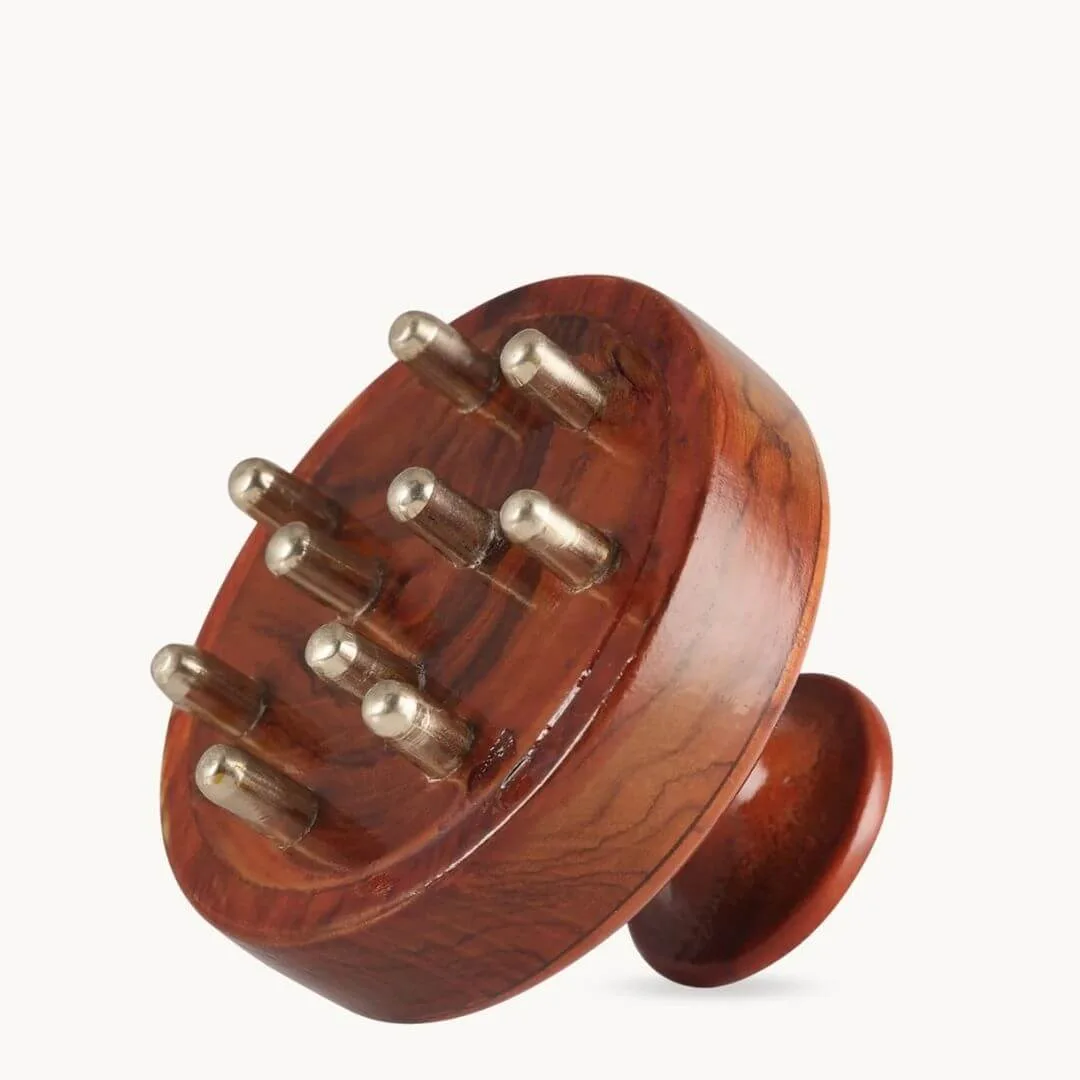
Demandez à quelqu'un qui pratique régulièrement le Shiroabhyanga (massage ayurvédique de la tête à l'huile chaude) à quel moment il le fait: la réponse est presque toujours la même, le soir, avant que la journée ne soit tout à fait finie. Si la tradition a retenu cette heure, ce n'est pas un hasard.
La tête porte la journée
L'Ayurveda considère la tête comme le siège des sens. Tout ce que la journée a demandé aux yeux, aux oreilles et à l'esprit y est passé. L'huilage du soir est la manière dont la tradition reconnaît cette charge et la dépose. Huile chaude, cercles lents, aucune hâte: la pratique ne vous demande rien d'autre que de l'attention, et c'est précisément pourquoi elle fonctionne comme une frontière entre le jour et la nuit.
Ce qu'apporte une pratique régulière
Les textes parlent de l'huilage quotidien de la tête en termes simples et concrets, et les pratiquants d'aujourd'hui reconnaissent les mêmes choses. Le cuir chevelu reste souple au lieu de tirer. Le cheveu, nourri à la racine, garde sa douceur et sa brillance et se coiffe plus volontiers. La nuque et les épaules, qui portent davantage de la journée qu'on ne l'admet, sont incluses dans le massage et relâchent une partie de ce qu'elles retiennent. Et la transition vers la nuit devient un signal que le corps reconnaît: la plupart des gens constatent que le sommeil vient plus volontiers les soirs où ils pratiquent.
Rien de tout cela n'exige de longues séances. Dix minutes, deux ou trois soirs par semaine, avec une huile chaude et une attention entière, valent mieux qu'une séance élaborée de temps en temps.
L'huile compte
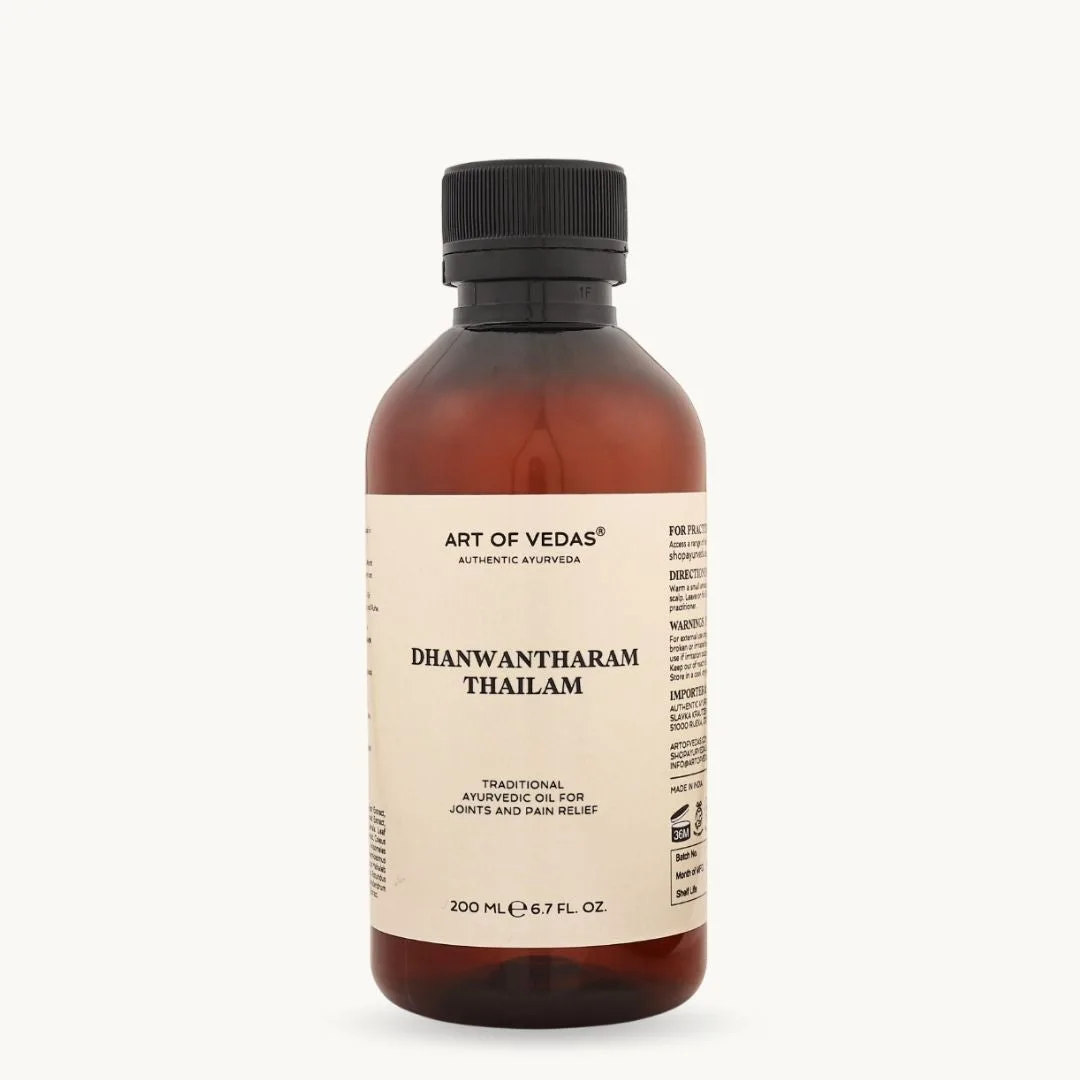
Une pratique du soir mérite une huile composée pour la tête plutôt qu'une simple huile de cuisine. La combinaison classique est une base de sésame portant Amla, Bhringraj et Brahmi, les trois plantes vers lesquelles la tradition se tourne d'abord dès qu'il s'agit de la tête et des cheveux. Notre Huile de Shiroabhyanga suit cette composition et s'achève sur le romarin, la lavande et une pointe de menthe poivrée, pour que le parfum lui-même appartienne au soir.
Faire durer l'habitude
Les habitudes tiennent quand elles s'accrochent à un repère fixe. Gardez le flacon là où vous le verrez après le dîner. Faites tiédir l'huile pendant que la bouilloire chauffe. Donnez à la pratique les mêmes dix minutes, au même moment de la soirée: au bout de quelques semaines, elle cesse d'être une tâche et devient la charnière de la nuit. La méthode complète se trouve dans notre guide du Shiroabhyanga pas à pas, et le contexte plus large dans le guide de la routine Dinacharya, où chaque pratique retrouve son heure.
Usage externe uniquement. Ne remplace pas un avis médical professionnel.